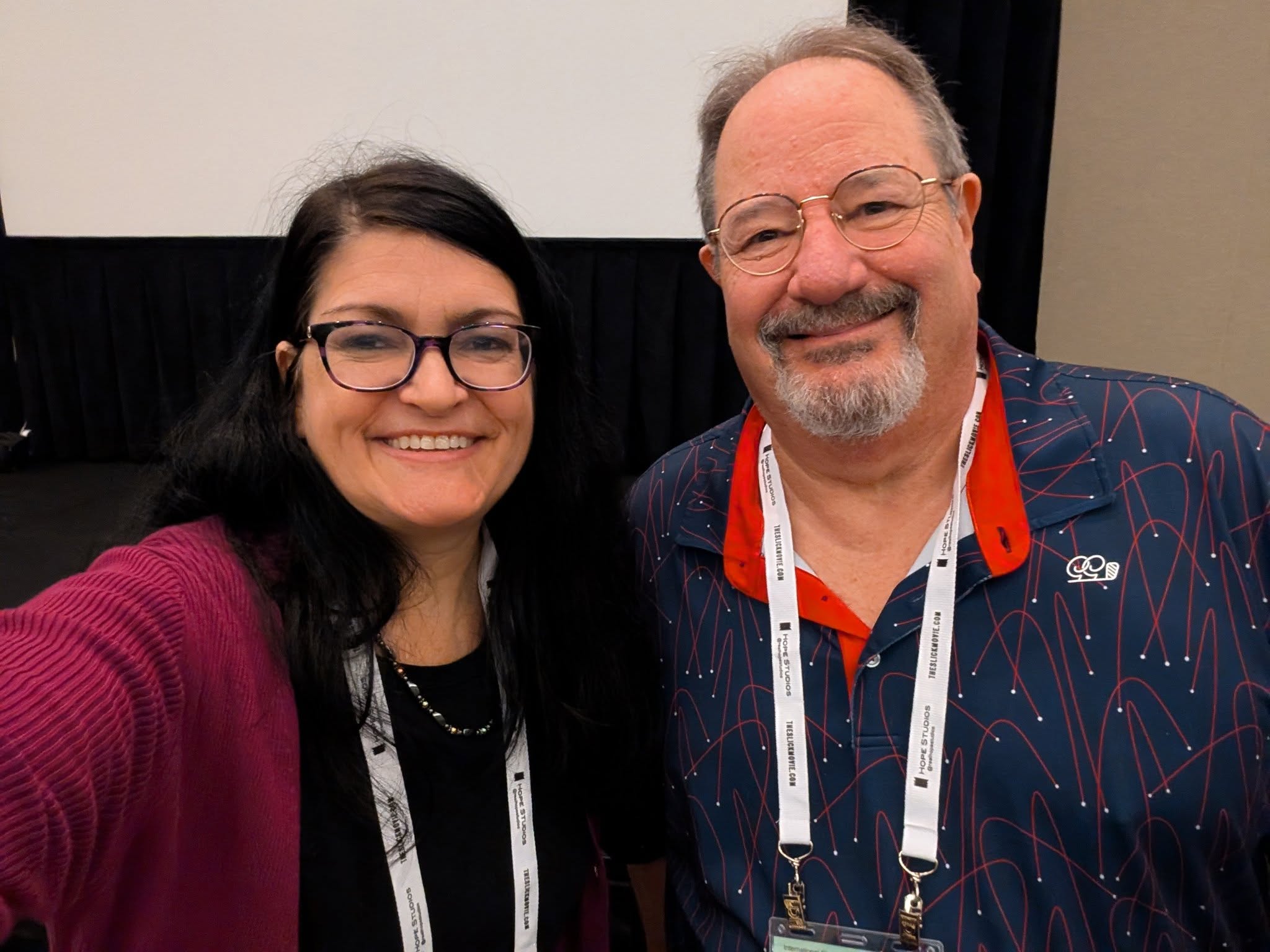
Cheryl & Bob at ICVM / Orlando Oct. 2025 (co-teaching a class on pitching scripts)
It’s been such an honor to serve with screenwriter, Bob Saenz, on a variety of screenwriting panels and speaking together at conferences. By far, the most fun was co-teaching about how to pitch scripts to producers. Bob is not only a talented writer, but a great friend. A champion of fellow writers. There is not a phone call I ever end with Bob where I’m not left super encouraged about what’s next. I hope you enjoy this conversation with a very experienced screenwriter.
What is your favorite script that has been produced and why?
Can I have a couple? Help for the Holidays will always have a special place in my heart. My first produced film, almost word-for-word what I wrote. Summer Glau in her only Hallmark film ever (she said in an interview the only reason she did it was the script, yay!). It was a huge ratings success for Hallmark. The start of a 10 film run for me with them.
I also love Christmas Yule Blog… a film I wrote for Lifetime that celebrated my Cuban roots. It’s different. Set in New Mexico, no snow, and the use of all of the things I experienced as a child with my Grandmother at Christmas to make it real. Again, everything on screen almost exactly as I wrote it. That doesn’t happen a lot to any writer. Some films more than others and some–not anything you wrote. But that’s another topic.
#3. I’m grateful for Extracurricular Activities, a script I wrote that got my writing and voice noticed, that opened every door in Hollywood. It’s the Anti-Hallmark script that got me my first job a Hallmark. Then it got made, 18 years and 8 options later, including a studio. It made a couple of 10 Best Films of 2019 lists by some pretty good critics. And it’s turned out to be a cult film now.
Truth? I really like 19 out of the 21 films I’ve got my name on as writer. No, I’m not telling you the two I dislike.
What is your approach to taking notes from producers and networks? And what do you do when you know a note is “off” or will potentially impact the story in the wrong direction, but you still have to address it?
Notes are inevitable if your script is in development or production. You’re going to get them. And as more people are involved or like the project and want their stamp on it, the notes will vary, sometime even being at odds with each other. How you react to them will be the difference if you stick to the project or are cut loose and replaced.
I happen to love notes. Most of the producers and directors I’ve worked with are good at what they do and most of the notes I get actually make the script better. I’m always grateful for good notes. I make it a point to thank people for their good notes.
Do I get notes I disagree with? Absolutely. How do I deal with those? Story logic. The worst thing any writer can do when they get what they think is a note that doesn’t make story sense, and it’s ALL about story, is to let their ego or emotions control their reaction to it. That’s writer suicide with producers. You might as well fire yourself. But if you deal with those notes by using the logic you’ve used to build your story, your knowledge of character and plot and how interrelated everything in your story is and how a particular note would disrupt the story to the point that an audience wouldn’t believe it anymore… or it would change the story they wanted, you can often persuade them to forget that note.
If they still want a note you know will not improve your story, you use your creativity to integrate it in the least harmful way possible and still satisfy the note giver. It’s a tightrope. Your complete knowledge of your story and of what your characters will or won’t do by the way you’ve defined them in your story will make these kinds of notes easier to deflect. The more experience you have, the simpler this is to navigate.
It always comes down to the Golden Rule. Them with the Gold makes the rules. Screenwriting at this level is a job and your job is to integrate notes. You get to be creative, you get to give them your point of view on each note (notice I didn’t use the word “argue”), but you still have to do it.
Writers have to get creative to make our living as writers and think outside of the box. What is your advice for film and TV screenwriters to do for work during those in-between times? What kinds of jobs can they seek that are still writing even if not for feature films and TV shows?
I can only speak from my experience. I wrote two books. One is a non-fiction book about the business of screenwriting based on my experience, That’s Not the Way It Works, and I wrote a novel that’s done pretty well. It’s not a lot of income, but it comes monthly.
I’ve also written instructional videos, corporate videos, articles for Script Magazine, for Pipeline Artists, for Blogs, and Writer Websites. This all depends on where you are on the experience list. But places like LinkedIn and others are good places to look for these kinds of opportunities. Right now, companies are out there looking for writers for Vertical Videos. It’s not very good pay, but it’s a stepping stone. You have to be proactive. Work never arrives at your door, you need to endlessly seek it.
How much plotting do you do in advance of starting a writing job? What are some of your go-to techniques? (I’ve seen your yellow legal pad comments and photos on social media. What’s that about?)
Ok. I’m going to get this out of the way. I’m a pantser. I do not outline. I do not write a treatment. I do hand write character and story notes on yellow legal pads before I start. I always know my story idea, basic characters I’ll need (I come up with others as I write), and I know the ENDING. The unchanging ending. So I have a path to put my protagonist on. Nobody’s getting lost in the weeds because I have no specific place for them to get to.
Then I spend days writing it in my head. Yep. I’ll use the legal pads to jot down cool two or three word stuff I’ll use at some point or a set-up and pay-off, but I discover a lot of those, too, as I write. I also rewrite as I write. It takes a little longer, but I end up with a first draft that looks like a third one. I don’t believe in the vomit draft because I don’t want anything I’ve written to have the word vomit attached to it.
Do I recommend this way of approaching the writing of a script to others? No.
If you ask 100 writers what they do to prepare to write a script, you’ll get 100 different answers. My advice? Try it all. Outlines, Treatments, Note Cards, Bullet Points… try it all. See what works for you. I tried them all and by page 11 was so far away from what I planned I stopped using them. That’s me. Not you. It works for me. You need to find what works for you.
What would you tell your younger, aspiring writer self, when you were just starting out, that you wish you’d known from the beginning?
You have an hour? How hard it was going to be. How much craft there is to learn to do this well. How much marketing you have to do after your script is ready to be seen. How long it takes to get your first produced film. These are things everyone starting out needs to know.
But I’m happy that I went ahead without knowing people said you need to stay in a lane, get known for writing one genre. I didn’t know that so I wrote in a ton of different genres and was successful at it. I’ve never stayed in any lane and it’s not only been creatively a blast, but opened me up to all kinds of jobs in all kinds of genres.
Right now, I’m actively working with producers on a couple of Christmas Rom/Coms, a Horror film, a Children’s Animated Series, a big Animated Musical Adventure, and a dramatic anthology series.
It’s not a lane, it’s a freeway, and I’m happy to be on it.
Wow. That is worth repeating. It’s not a lane; it’s a Freeway. So great, Bob. Any adds?
I always have to bit of advice for writers.
One: Don’t be boring. Look at every story you want to write at the oddest angles you can. Be original. Don’t follow trends, set them.
Two: Don’t give up. There are going to be dark times as you try to do this and you’ll want to give up. People will tell you to give up. If you really want this, you won’t listen to them or yourself and you’ll plow forward. Nobody who gave up ever went on to success. It can be done. If I did it, anyone can. Honest.
Thank you so much for joining us for this insightful Q&A Bob.
What are websites or links to follow you?
I’m on X and Instagram as @BobSnz
And on Facebook as Bob Saenz
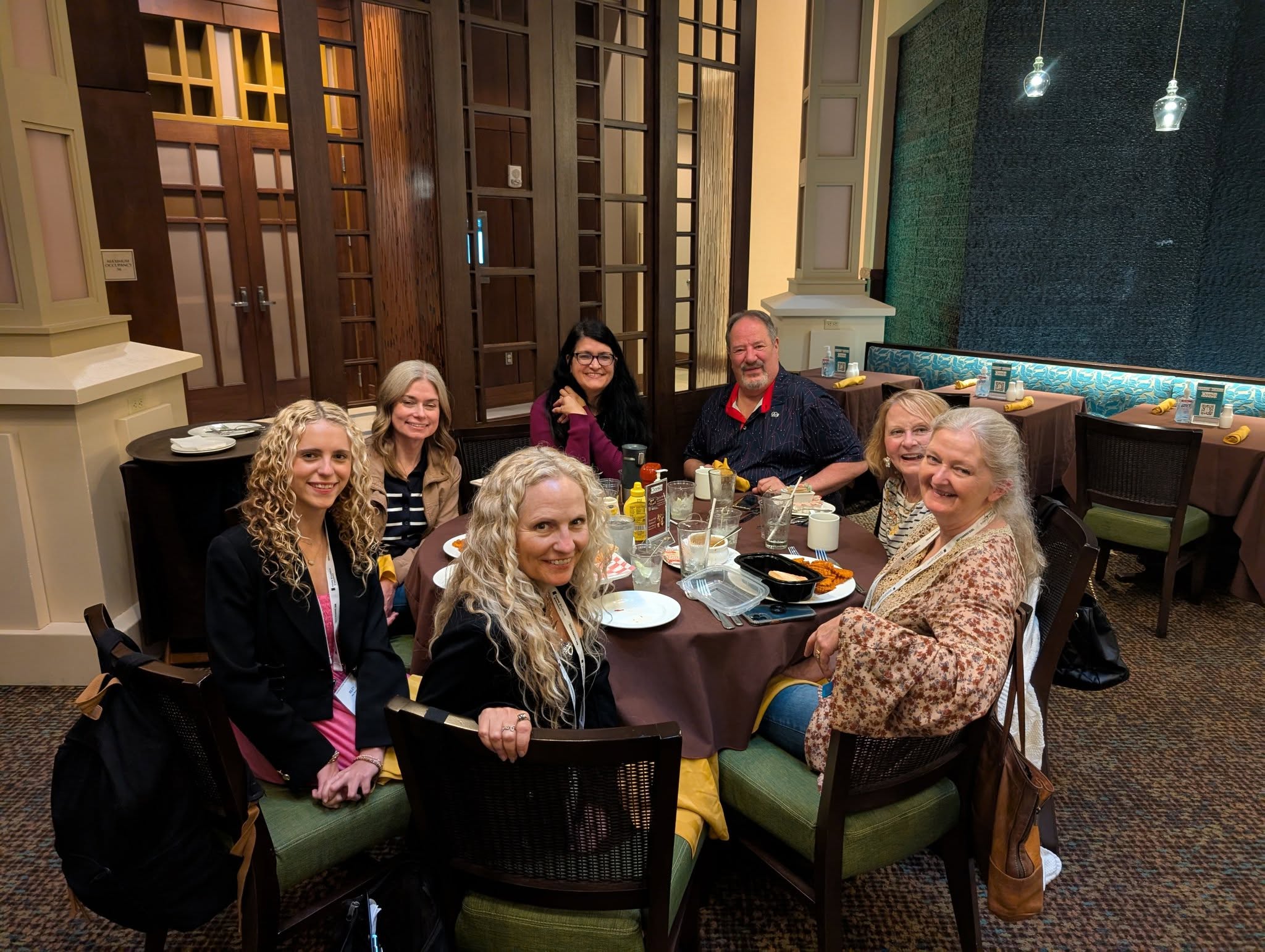
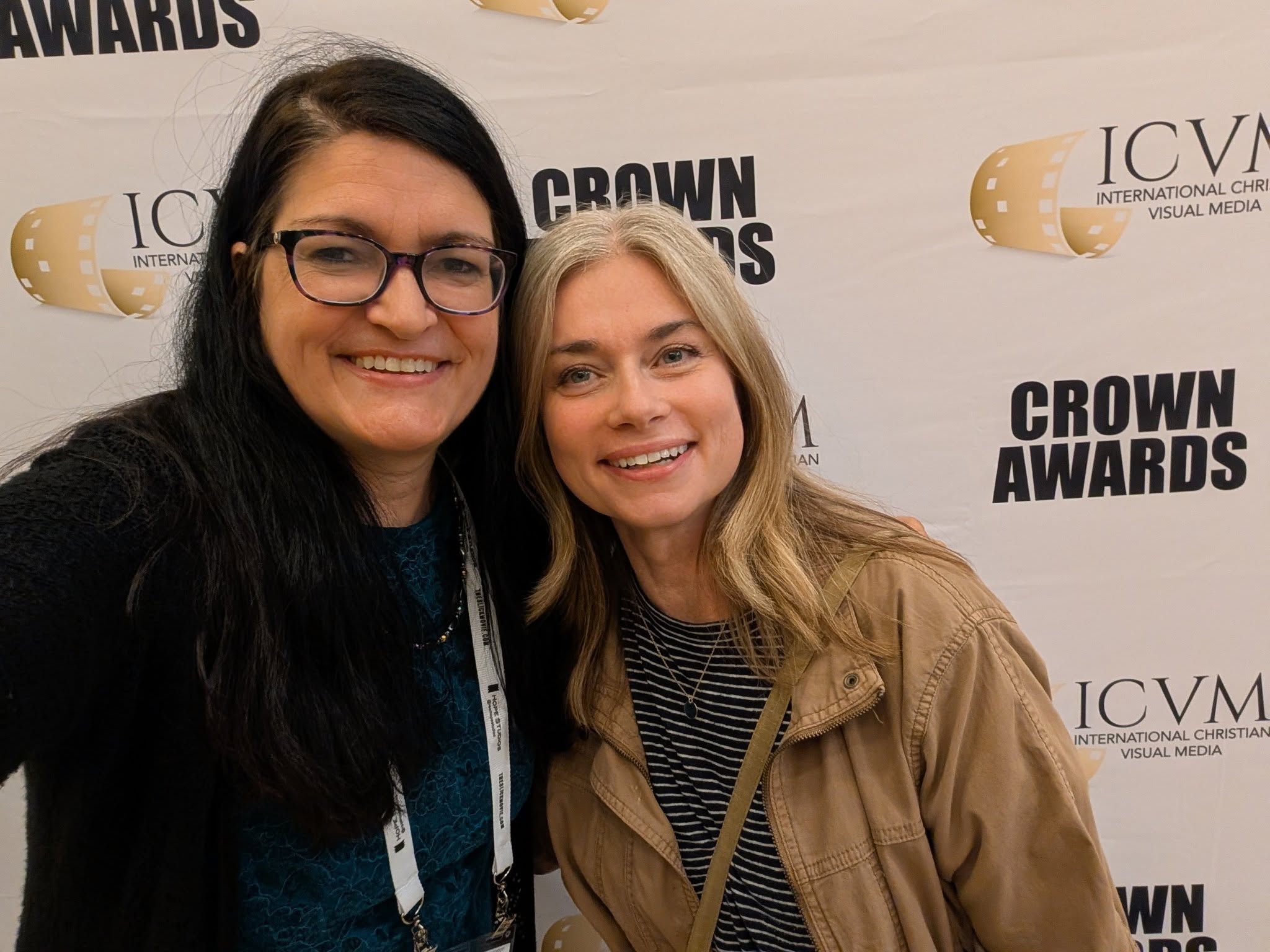
PHOTO 1: ICVM October 2025, Cheryl with Bob, his wife, Margie, writer, Heather Blanton, Actresses Denise Gossett & Riley Beeson, and writer, Rene Gutteridge.
PHOTO 2: ICVM Cheryl with Rene Gutteridge
For further deep dives into the process of other professional writers pictured here, check out my other writer Q&A blogs with Heather Blanton and Rene Gutteridge.
 Cheryl McKay (Screenwriter/Book Author)